Lessons from the Fulani Market for Ghana’s 24-Hour Market ModelLessons froLessons from the Fulani Market for Ghana’s 24-Hour Market Modelm the Fulani Market for Ghana’s 24-Hour Market Model
An economist revisits his grandmother’s folktale to question whether Ghana is building marketplaces before building markets
By Noble News
Ghana’s plan to roll out modern 24-hour model markets across all 261 districts is underway, but a story told by a grandmother in the Upper East Region offers a cautionary economic lesson for the flagship policy.
The initiative, a key pillar of President John Dramani Mahama’s 24-Hour Economy and Accelerated Export Development Programme (24H+), is intended to ease congestion in major markets and transform them into vibrant economic hubs operating 24 hours a day, seven days a week. 34af
According to government briefings, each model market will be equipped with cold storage, sanitation systems, digital payment infrastructure, childcare centres, police and fire posts, clinics and banking services.
At sod-cutting ceremonies in Bimbilla, Dormaa Ahenkro and Tamale, President Mahama has said every district will benefit, describing the markets as the linkage between farm produce and the consumer. 34af8760
The ambition is transformative. But will the buildings create the commerce?
That question is at the heart of a reflective essay by a Ghanaian economist currently living in Accra, who draws on a Fulani folktale his grandmother used to tell.
The Empty Marketplace
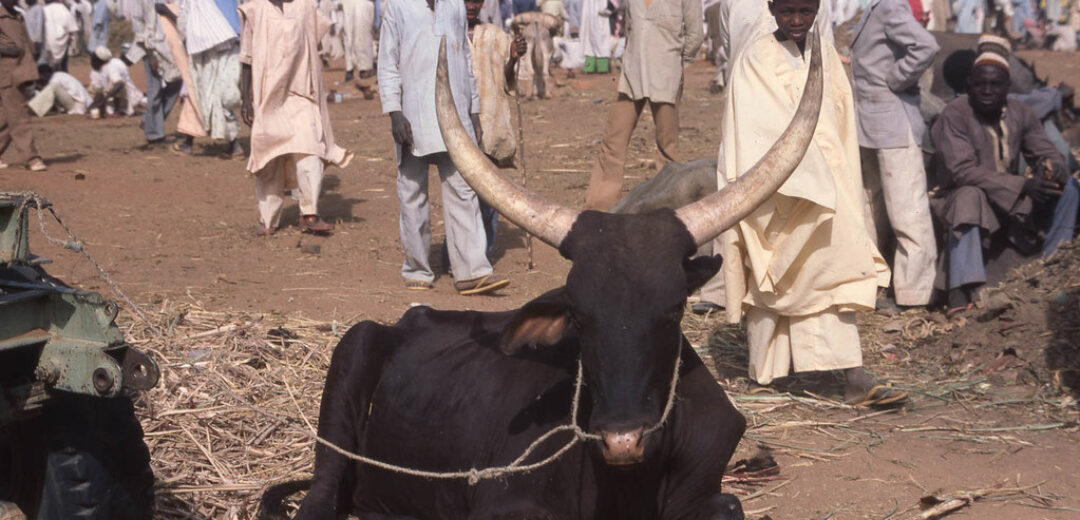
In the story, the Fulani decide to establish a market of their own. They choose a day and a place. On the appointed day, the first person arrives, finds nobody, and leaves to return later when it is full. The second does the same. Then the third, the fourth and the fifth.
Everyone was waiting for someone else to make the first move. By sunset, nothing had been bought or sold. The market existed in their minds, but never in practice.
The grandmother’s moral was simple: a group project cannot succeed when everyone waits for someone else to begin.
For the economist, there is a second lesson, one rooted in economics: a market is more than a marketplace.
Building the Place vs Creating the Demand
He recalls the physical markets of home: Tindongo, which converges every three days from about 3 p.m., Pelungu, whose busiest hours begin much earlier, Bolgatanga Market, and even the small room of the woman who sold biscuits, akpeteshie, gari and sugar.
None became markets because someone first constructed a building and declared it a market, he argues.
He cites Alebna, the man who started what is now Tindongo market. He did not begin with several hectares of land or a government-built complex. He began around an ebony tree.
Traders came because there were customers. Customers came because there were goods. More traders came because there was money to be made. The physical market grew with the activity.
That distinction, the writer argues, is critical for Ghana’s 24-hour economy.
The government can provide lights, shops and security. Those things matter. But they do not, by themselves, give a trader a reason to open at 2 a.m.
“How many people will want to buy Amani from Madam Talata at two in the morning?” he asks. “Will there be enough customers to make it profitable for her to leave the comfort of her bed and husband, pay for electricity, bear the additional security risks and keep her business open through the night?”
If the answer is no, a beautifully constructed 24-hour market risks becoming a well-lit building that nobody uses at 2 a.m.
The Gate Is Not Where The Problem Begins
The analysis goes further. Even if a trader is willing to stay open, will the customer come?
A secure market does not automatically create a safe journey to the market, the essay notes. A customer living five kilometres away must still walk through dark streets and past fields of tall sorghum at 2 a.m. to get there.
A functioning 24-hour economy therefore requires more than buildings. It requires transportation, roads, electricity, security, population movement and above all, sufficient economic activity to make staying open worthwhile.
The writer points to his own experience in Accra, where some food vendors, trotro drivers and Waakye sellers operate deep into the night.
They do so not because a special 24-hour Waakye market was built, but because demand already exists.
The area is close to a major transport hub, travellers arrive, drivers work late, night workers need food. Economic activity came first.
That raises the central policy question: where will the night-time demand come from in districts where economic activity naturally tapers after sunset?
Not Every District Needs The Same Answer
Ghana’s districts are not economically identical, the author argues. What makes 2 a.m. commerce viable around a major transport hub in Accra may not exist in Namoalug. A border town may have different opportunities from an agricultural district.
A university town may have a different night-time economy from a farming community.
Yet current policy, as announced, promises an identical solution everywhere: a model market in each of the 261 districts.
The essay proposes a more strategic approach:
– Improve what works: If an existing market is thriving, prioritize better sanitation, drainage, storage, electricity, roads and security.
– Expand where needed: If a market has outgrown its space, expand it rather than building a new one.
– Target economic nodes:Concentrate 24-hour infrastructure and incentives where night-time commerce has genuine potential
– transport hubs, hospitals, universities, industrial areas, border towns, and processing centres.
“The objective should not be to have a 24-hour market in every district. The objective should be to have a 24-hour economy where the economics make it possible,” he writes.
Beyond Tick-Box Infrastructure
The author stresses he is not opposed to market infrastructure. A well-designed market improves sanitation, security and storage whether or not it operates around the clock.
His concern is when infrastructure becomes the measure of success itself, and when scarce public money is used to produce physical evidence that a policy has been implemented, rather than solving an economic problem.
He also cautions against repurposing scarce public spaces, including school spaces, for market development without a clear analysis of opportunity cost.
This aligns with warnings from analysts that the 24-hour economy faces structural labour market tests, including wage pressures for night shifts and the capacity of SMEs to absorb additional costs. 78b2
The Real Lesson
In the end, the essay returns to the grandmother’s story.
The Fulani gathered at a place and expected a market to emerge. But everyone waited for everyone else. So nothing happened.
Alebna did something different. He started around an ebony tree, and others came because they had a reason to come.
“Perhaps that is the lesson Ghana should take into its 24-hour economy,” the author concludes. “We should not confuse creating a place for commerce with creating the conditions for commerce to thrive.
The government can build the marketplace. It can provide the lights, roads, security and infrastructure. It can create incentives and remove barriers.
But it cannot command customers to appear at 2 a.m.”
“Because in the end, the government can build the marketplace. It cannot build the customers.”
Credit:Joseph Salmowor