Catholic Bishops Urge Chief Justice to Avoid Partisan Appearance After SSNIT and MIIF Comments
Accra, Sept. 7, 2026 – The Ghana Catholic Bishops’ Conference has cautioned Chief Justice Justice Paul Baffoe-Bonnie to guard against comments that could create a perception of political bias, following his recent working visits to state institutions.
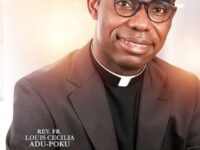
In a statement issued on Sunday, September 6, 2026, from the National Catholic Secretariat at Centenary House, near the Tetteh Quarshie Interchange in Accra, and signed by its President, Most Rev. Matthew Kwasi Gyamfi, Bishop of Sunyani, the Conference said it had followed with interest the Chief Justice’s remarks during his visits to the Social Security and National Insurance Trust (SSNIT) and the Minerals Income Investment Fund (MIIF) on September 2, 2026.
The Bishops said there is nothing improper in itself in the Chief Justice visiting public institutions, acquainting himself with their operations or commending genuine improvement, noting that these institutions belong to the people of Ghana.
They however said the difficulty lies not in the visits, but in the political character that some of his remarks, particularly his reference to the “past eight years”, can reasonably be understood to have acquired.
In Ghana’s national context, the statement said, such a phrase is readily heard as a comparison between the present administration and its predecessor, making what may have begun as a straightforward assessment of institutional performance take on the appearance of a partisan judgment.
The Conference noted that this concern had already been raised publicly, including by the Ghana Centre for Democratic Development, which cautioned that such remarks risk creating an impression of political endorsement and could weaken confidence in judicial impartiality.
It also acknowledged the clarification from the Judicial Service that the Chief Justice’s observations were made in good faith, without intention to compromise judicial independence, and its reaffirmation of his commitment to the integrity of the Judiciary and to equality before the law, which the Bishops said they receive in good faith.
The Bishops emphasized that the office of Chief Justice is not that of an ordinary public commentator, as courts may at any time be called upon to adjudicate disputes involving Government, political parties or public institutions.
They stressed that judicial independence depends not only on actual impartiality but also on the visible, unmistakable appearance of impartiality.
The statement was clear that the Bishops are not suggesting the Chief Justice is partisan or that the Judiciary has been compromised, adding that such conclusions would go beyond the evidence available and that calls for his resignation on this basis alone strike them as disproportionate.
The Conference said the Chief Justice, like any citizen, is entitled to his own convictions, but his public conduct in office should not create room for reasonable doubt.
The Bishops suggested the better course would have been to commend the achievements of SSNIT and MIIF on their own merits, encouraging continued efficiency, accountability and service to the Ghanaian people, without setting one administration’s record against another’s.
They appealed to all sides to receive the moment as an occasion for reflection rather than an opportunity for partisan advantage, stating that the governing party ought not to treat criticism of the Chief Justice as an attack on its own record, nor should the opposition treat his remarks as proof that the courts have been captured.
The same standard of restraint, they said, must be asked of every public office holder.
The Conference said it continues to hold the Judiciary and all who serve the nation in public office in prayer for wisdom to serve truth, justice and the unity of the country.