
“Ka bi ma menka bi” is not a licence to insult – Rev. Fr. Sakpaku warns against politics of insults
By DominicDuut| September 21st, 2026
In recent times, our radio stations, television programmes and social media platforms especially TikTok and Facebook have increasingly become arenas for personal attacks, abusive language and, in some cases, hate speech.
Instead of practising the politics of ideas, we are gradually normalising the politics of insults. Some people have been arrested and jailed, but I do not know how effective these arrests have been in addressing this canker in our society. I do not know how many prisons we will have to build if nothing is done about it.
Some people mistakenly defend this behaviour in the name of democracy. They refer to the Akan expression “Ka bi ma menka bi” “Say your part and let me also say mine.”
But “Ka bi ma menka bi” does not mean “Ka fuw na ma menkasa fuw.” “Speak offensively and let me also speak offensively.” Neither does it mean, “Let us insult one another.”
Democracy invites us to exchange ideas, question policies and propose better solutions.
It gives every citizen the right to speak, but it also requires us to listen. Its purpose is not to determine who can shout the loudest or insult most painfully, but to discover which ideas can best advance our common good.
As the Ghanaian proverb teaches, “Knowledge is like a baobab tree; no one person can embrace it alone.” No individual, political party, government, journalist or academic possesses all knowledge. We therefore need one another’s perspectives.
That is the wisdom behind genuine democratic dialogue. Ghana was not built by a single party or individual. The country we have inherited was won through the blood and toil of our forebears men and women of different ethnic, political, regional and religious backgrounds.
In traditional Ghanaian society, the tongue was expected to be disciplined. Publicly insulting an elder, chief, neighbour or even one’s age-mate could bring shame not only upon the offender but also upon the offender’s family.
Depending on the customs of the community, elders could demand an apology or some form of customary reparation. This did not mean that our ancestors never disagreed. They disagreed, but disagreement was expected to remain within the boundaries of human dignity and communal peace.
Among some Akuapem, it is jokingly said that a person may begin an offensive statement with “Mepa wo kyɛw” “Please.” Although adding “please” to an insult does not make it respectful, I guess it is because they do not want to denigrate the dignity of the person who may have acted wrongly.
Why, then, have we lost our sense of restraint? Why have we thrown our culture of respect to the dogs?
Our 1992 Constitution protects human dignity under Article 15, freedom of speech and expression under Article 21, and freedom and independence of the media under Article 162. These constitutional values must be upheld together.
Freedom of expression does not require the destruction of another person’s dignity. Citizens must be free to criticise the President, a former President, ministers, Members of Parliament, chiefs, bishops, pastors, imams and all other public officials.
Leadership must remain open to scrutiny. But there is a clear difference between criticising a leader’s decisions and attacking the leader’s humanity, family, ethnicity, religion, gender or physical appearance.
Whether an insult constitutes a criminal offence is a legal question that depends on its words, intention, context and consequences. However, legality is only the minimum standard of conduct. Many actions may not be criminal but are still harmful.
Refusing to brush one’s teeth or take a bath may not be a crime, but nobody doubts the consequences. In the same way, an utterance does not have to result in an arrest before society recognises it as destructive.
The dangers of the politics of insults
1. It degrades human dignity
Every human being is created in the image and likeness of God — the Imago Dei. When we deliberately humiliate another person, we attack that God-given dignity. Insults can wound people emotionally, psychologically and spiritually.
They also discourage competent citizens from entering public service. Many good people may be prepared to serve Ghana but are unwilling to expose their spouses, children and parents to relentless public abuse.
Are we driving decent people away and gradually leaving politics to those who can insult and endure insults? We can challenge bad decisions without destroying the person who made them.
2. It corrupts our children
Our children are listening to the radio in our cars. They are watching television, Facebook, YouTube and TikTok. They hear adults applauding politicians and commentators who specialise in humiliation. What lesson are we teaching them? That leadership belongs to the best insulter?
3. It endangers Ghana’s peace
Ghana is rightly proud of its reputation as a peaceful democratic country. But peace is not merely the absence of war. Peace also requires respect, justice, restraint and responsible communication. Insults produce anger. Anger can grow into hatred, and hatred can lead to discrimination or violence.
4. It kills serious national discussion
Every hour spent discussing who insulted whom is an hour taken away from unemployment, illegal mining, healthcare, education, corruption, agriculture, sanitation and the cost of living.
Ghana does not need leaders who merely excite crowds. We need people who can explain problems, defend policies with evidence, admit mistakes and propose workable solutions.
5. It normalises intolerance and division
A country in which NDC supporters insult NPP supporters, and NPP supporters insult NDC supporters, cannot build lasting unity. The Akan proverb says: “Abaa a yɛde bɔ Takyi no, yɛde bɛbɔ Baa.”
The standard we apply to our opponents must also apply to our own party. An insult does not become acceptable because it comes from someone wearing our party colours.
Media freedom must be protected, but freedom must be accompanied by professional responsibility. The National Media Commission is constitutionally mandated to promote media freedom and help maintain the highest journalistic standards.
Media houses should adopt practical measures: give presenters the authority to stop abusive callers, demand immediate withdrawal and apology, avoid repeatedly broadcasting inflammatory clips for ratings, introduce broadcast delays for sensitive live programmes, and train presenters in conflict-sensitive moderation.
All political parties, especially the NDC and the NPP, should call their communicators, serial callers, and social media activists to order. Every party should adopt and publish a clear code of conduct, train spokespersons to debate with facts, and suspend repeat offenders.
The responsibility does not rest with politicians and journalists alone. Every citizen with a smartphone is now a potential broadcaster. Before sharing any picture, video or message, ask yourself: Am I informing the public, or am I inflaming the public?
As Scripture warns, the tongue is a small part of the body, yet it can set a great forest on fire (James 3:5–6).
Ghana belongs to all of us. We must not burn down our common home merely because we occupy different political rooms.
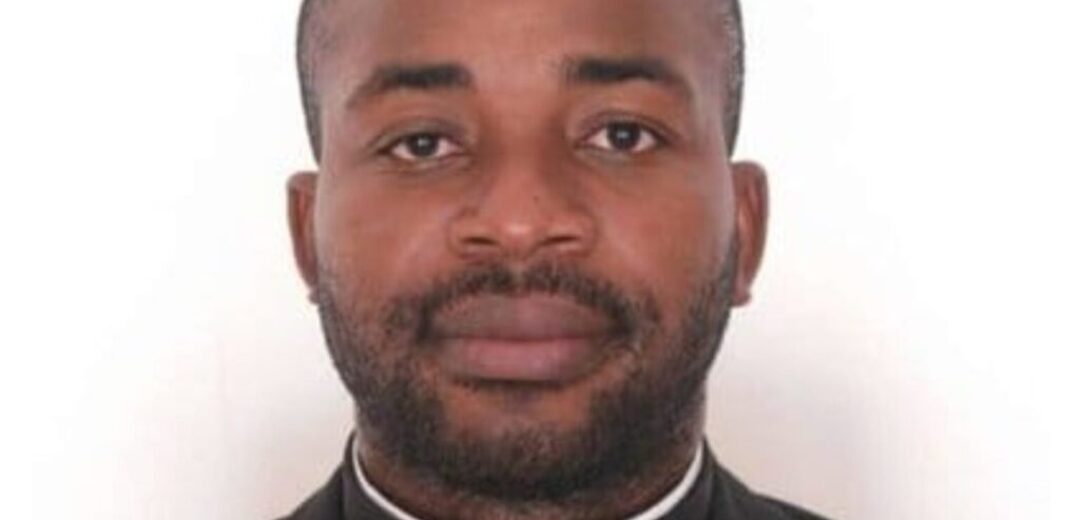
The writer, Rev. Fr. Stephen Kofi Sakpaku, is a Catholic priest and commentator. The views expressed are his own.
Source: Asaaseradio.