Catholic Bishops Open 2026 Plenary Assembly In Mamponteng, Set Sights On 150th Anniversary In 2030
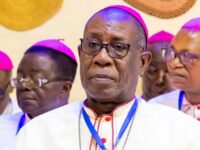
The Ghana Catholic Bishops’ Conference has opened its 2026 Plenary Assembly at Our Lady of Grace Senior High School Assembly Hall, Mamponteng, in the Konongo-Mampong Diocese.
The Assembly, which opened on Monday, November 9, 2026, is being held under the theme: “Communion, Participation and Mission: Preparing the Catholic Church in Ghana for Her 150th Anniversary.”
In a keynote address delivered at the opening ceremony, the Conference said the Assembly comes at a particularly significant moment in the life and mission of the Catholic Church in Ghana, as the Church prepares to commemorate 150 years of Catholic presence in the country in 2030.
The address noted that the approaching milestone is more than an exercise in historical remembrance.
It presents an opportunity for ecclesial introspection, spiritual renewal and pastoral reawakening, and calls for gratitude for the journey of faith that began in 1880 in the South and was followed by the North, and has since taken root across the nation.
The Bishops paid tribute to missionaries, catechists, indigenous clergy, consecrated men and women, lay faithful and countless witnesses whose sacrifices, perseverance and fidelity laid the foundations upon which the Church in Ghana continues to flourish.
It was announced that at the end of the Plenary, a well-outlined programme of activities will be released to be marked from the grassroots to the national level, beginning in 2027.
Explaining the theme, the keynote said communion constitutes the very heart of the Church’s ecclesial identity.
Through Baptism, all are incorporated into the one Body of Christ and made members of the one People of God, transcending ethnic, cultural, linguistic and social distinctions.
It added that communion finds its deepest expression in the Eucharist, is nourished by the Word of God and is sustained through visible unity with the Successor of Peter and the College of Bishops.
On participation, the address stressed that the Church’s mission is not the exclusive preserve of Bishops, Priests and Consecrated Persons.
Through Baptism and Confirmation, all the faithful participate, according to their respective vocations, charisms and states of life, in Christ’s prophetic, priestly and kingly mission.
It called for the voices and contributions of youth, women and men, catechists, teachers, healthcare professionals, farmers, traders, workers, persons with disabilities and those on the margins of society to be recognised, valued and meaningfully integrated into the life of the Church.
On mission, the Bishops said communion and participation find their ultimate fulfilment in mission, noting that the Church does not exist for herself but to proclaim Christ and to make present the saving love of God in the world.
The missionary vocation, they said, must find expression in homes, schools, universities, workplaces, hospitals, markets, public institutions and digital spaces, through witness to human dignity, promotion of justice and peace, solidarity with the poor and vulnerable, protection of creation and formation of consciences.
The keynote also highlighted the Golden Jubilee of diplomatic relations between the Holy See and the Republic of Ghana in 2026, marking 50 years of cordial relations, mutual respect, constructive dialogue and shared commitment to the promotion of the common good.
Following consultations with relevant stakeholders, a proposal has been advanced to defer the climax of the celebrations to 2027, when they may be held in conjunction with Ghana’s 70th anniversary of independence.
The Bishops further indicated that the Plenary will discuss other national, ecclesial and pastoral issues, including the ongoing constitutional review process, the protracted conflict in Bawku, and the reported explosion in Hamile along Ghana’s northwestern border.
Other issues to be discussed include drug trafficking and substance abuse, the status of education and indiscipline in schools, persistent illegal and irresponsible mining, popularly known as galamsey, and the Human Sexual Rights and Family Bill.
On the constitutional review, the Bishops encouraged the review bodies, Parliament, the Executive and other stakeholders to approach the exercise with openness, intellectual honesty and an overriding commitment to the national interest, and not reduce it to partisan calculations or narrow institutional interests.
On Bawku, they acknowledged the efforts of the State and other stakeholders but said the persistence of the conflict calls for renewed determination, discussions, strategy and coordinated leadership, as it continues to exact a painful human, social and economic toll.
On the Hamile explosion, they said the incident brings into sharp focus the security vulnerabilities of border communities and the wider implications of instability in the Sahelian sub-region, underscoring the urgency of strengthening border surveillance, intelligence coordination, interagency collaboration and community-based early-warning systems.
In conclusion, the Bishops said the Church to be celebrated in 2030 must be one whose communion is deeper, whose participation is more meaningful and whose missionary witness is more compelling.
They added that at the end of the Plenary Assembly, as is customary, a communiqué will be issued reflecting on the theme and issues of national concern.
The 2026 Plenary Assembly, taking place in Jamasi in the Konongo-Mampong Diocese, was duly declared open in the name of the Father, and of the Son and of the Holy Spirit.