BISHOP OSEI-BONSU CLARIFIES MEANING OF “FALLEN ASLEEP” AND “DIED IN YOUR MERCY” IN EUCHARISTIC PRAYER II
By Noble News | Konongo-Mampong
Wednesday, 25th November, 2026
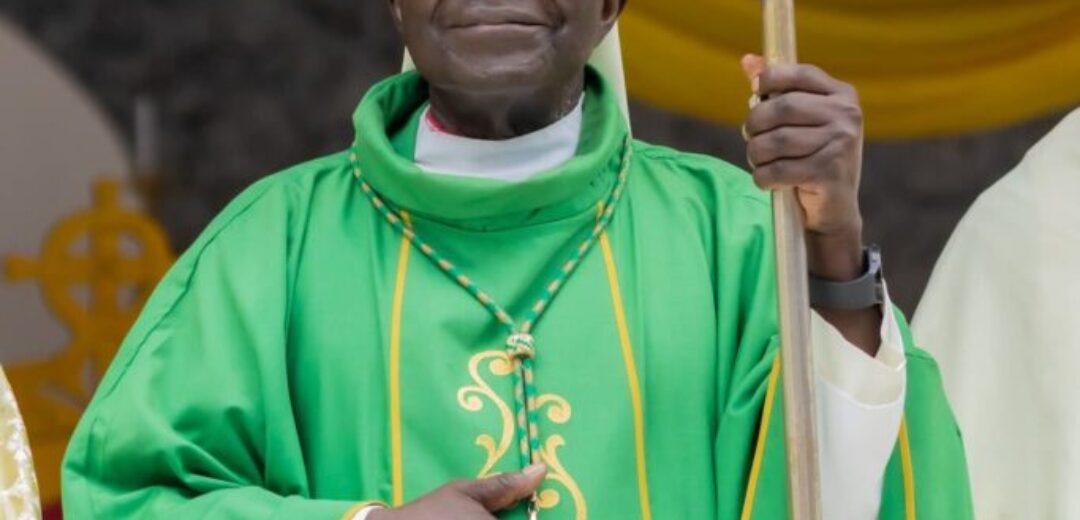
The Emeritus Bishop of the Konongo-Mampong Diocese, Most Rev. Joseph Osei-Bonsu, has clarified a portion of Eucharistic Prayer II that continues to raise questions among Catholics.
The clarification followed questions from Nana Kwame Ofori on the prayer in which the priest says:
“Remember also our brothers and sisters who have fallen asleep in the hope of the resurrection, and all who have died in your mercy: welcome them into the light of your face.”
Nana Kwame Ofori wanted to know who those who have “fallen asleep in the hope of the resurrection” are, who those who have “died in your mercy” are, and whether the prayer implies that those who have “fallen asleep” are not in the mercy of the Lord.
One Prayer, Not Two Judgements
Responding, Most Rev. Osei-Bonsu said the two expressions do not divide the dead into those inside God’s mercy and those outside it.
He explained that the prayer first names the departed in the language of Christian hope, and then entrusts all the dead more widely to God’s mercy.
“It is an intercession. It is not a declaration that anyone is beyond mercy, and it is not a judgement about the final state of any particular person,” the Bishop stated.
He noted that Eucharistic Prayer II takes its basic shape from the ancient eucharistic prayer in the Apostolic Tradition, attributed to Hippolytus of Rome in the third century, while its intercessions were composed for the Missal of Pope St. Paul VI in 1969.
According to him, the concern of the passage is charity the Church remembers her own children and, in the same prayer, all whom God has made.
“The distinction between the two groups is therefore not a division of God’s mercy but a widening of the Church’s prayer to embrace the whole human family,” he said.
*Those Who Have Fallen Asleep*
The Bishop explained that “fallen asleep” refers in the first place to baptised Christians who died in communion with Christ and His Church.
He said “fallen asleep” is the ordinary Christian way of speaking about death and does not mean the soul is unconscious or has ceased to exist.
He pointed out that the word “cemetery” comes from the Greek word koimētērion, meaning “a sleeping place”.
Referring to Scripture, he cited St. Paul: “We believe that Jesus died and rose again, and therefore God will bring with him those who have fallen asleep” (1 Thessalonians 4:13-14).
He added that to say the faithful have “fallen asleep” expresses the Christian conviction that death is a passage and a resting in hope, because Christ has conquered it.
Those Who Have Died In Mercy
On the second expression, Most Rev. Osei-Bonsu said it broadens the Church’s remembrance to all the dead whom the Church is able to commend to God.
He stressed that the two expressions overlap and should not be read as opposing categories.
While the first emphasises Christian hope in the resurrection, the second broadens the Church’s appeal to mercy.
“The movement of the prayer is from the particular to the universal: first the Church prays for her own children who died professing the Christian hope, and then for all the dead, so that no one is left out. Both groups are saved only by the mercy of God, won through Jesus Christ,” he explained.
Why The Church Prays For The Dead
The Emeritus Bishop reminded the faithful that the Catechism teaches that the Eucharistic sacrifice is offered for the faithful departed who have died in Christ but are not yet wholly purified, so that they may enter into the light and peace of Christ (CCC 1371).
He said the Church prays because she believes her prayer is heard, and because love does not cease at the grave.
He cautioned against two errors presumption, which treats salvation as settled and sees no need for prayer, and despair, which treats the death of a loved one as a reason to stop hoping.
“Eucharistic Prayer II steers between the two,” he noted.
In conclusion, the Bishop said the prayer can be understood as: remember those who have died trusting in the resurrection, and remember also all the departed whom we commend to your mercy, including those whose faith is known fully only to you, and bring them into the fullness of your presence.
He encouraged the faithful to pray with hope for the departed, with trusting confidence for all the dead, and with humility before a mercy that judges perfectly and saves beyond human sight.