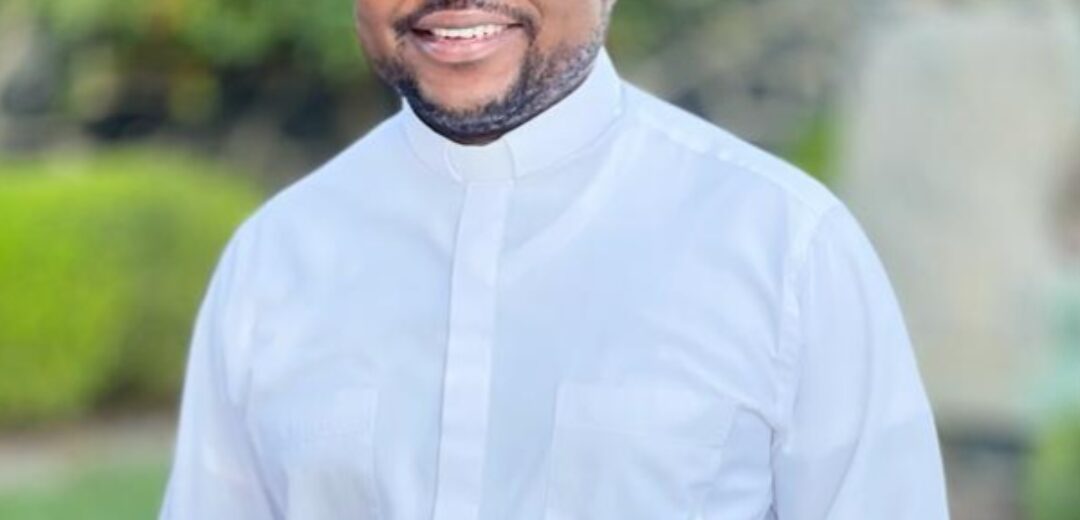
Defending Ghana’s Democratic Pillars:Rev.Fr.Emmanuel Adu Addai.
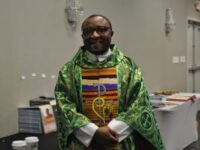
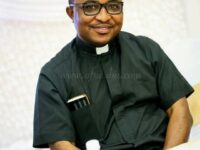
Rev. Fr. Emmanuel Adu Addai is a Ghanaian Catholic priest serving in the Columbus Diocese, USA. He is a Lecturer in Social Ethics and Bioethics at St Gregory the Great Provincial Seminary, Parkoso.
Previously, he was associated with the Catholic Archdiocese of Kumasi, Ghana,He has urged the good people of Ghana and the sitting government that its a troubling development that has emerged in Ghana.
Some influential individuals, political loyalists, and even a few pastors have begun openly calling for a presidential third term, despite the clear limits set by the 1992 Constitution.
In a deeply religious society like ours, such calls are not harmless talk. Words spoken from pulpits, radio stations, and political platforms carry moral weight.
When constitutional violation is wrapped in prayer, prophecy, or partisan praise, ordinary citizens are subtly encouraged to see illegality as virtue and ambition as divine purpose.
This is dangerous for Ghana.Our democracy was not built on revelations or personalities; it was built on restraint, sacrifice, and a shared agreement that no one—no matter how popular, effective, or anointed—is above the Constitution.
When loyalty to a leader replaces loyalty to the Republic, the very foundation of our peace is shaken.
Ghana Is Not Ready for a “Spiritual Overthrow” of the Constitution
We must speak honestly: Ghana is not ready—socially, politically, or morally—for a spiritual overthrow of the Constitution. We are a nation governed by law, not by private revelations.
The Constitution represents the collective will of Christians, Muslims, traditionalists, and citizens of all beliefs. To suggest that divine instruction can suspend constitutional order is to invite confusion, division, and instability into our national life.
Once we accept that pastors’ prophecy can override constitutional limits, we open the door to chaos.
Tomorrow, another “word from God” may justify postponing elections, silencing critics, or concentrating power indefinitely. Ghana’s peace rests on clear rules and shared commitments—not competing claims of divine endorsement.
And this must be said plainly, without hostility but with moral clarity: God has not communicated to any pastor that Ghana’s Constitution should be set aside for a third term. God does not contradict justice, order, and lawful authority.
No individual has received a private revelation that cancels a national covenant freely agreed upon by the people.
Faith is meant to form conscience, not replace constitutional governance. When pastors turn prophecy into political endorsement, they endanger both democracy and the credibility of the Church.
A Word of Counsel to the President of GhanaAt this moment, the greatest responsibility lies with the president himself. Leadership demands discernment. Not every voice of praise is wise counsel.
Not every call for continuity is motivated by love for Ghana. Many of those pushing for a third term are driven by selfish ambition—by fear of losing access, influence, contracts, or relevance.
In our own Ghanaian wisdom, these are not elders offering counsel; they are courtiers protecting their seats at the table.
True leadership requires the courage to disappoint flatterers, to silence enablers, and to choose the harder but honourable path of constitutional fidelity.
History will not remember how loudly people shouted “stay.” It will remember whether the president had the moral courage to say, “The Constitution must stand.”
Why a Third-Term Agenda Undermines Democracy
Presidential term limits are not punishment; they are protection. They protect the nation from the concentration of power and protect leaders from the temptation to overstay.
Ghana’s two-term limit has given us peaceful transitions, electoral credibility, and international respect.
It has saved us from the instability that has plagued many nations on our continent.
No political party owns Ghana. Parties come and go; the Republic remains. Any attempt—direct or indirect—to stretch, reinterpret, or spiritually override term limits places partisan survival above national stability.
Performance, no matter how impressive, does not justify permanence. In a healthy democracy, no leader is indispensable.
If progress collapses when one person leaves office, then institutions have failed. Ghana’s strength lies not in personalities but in systems that outlive them.An Ethical Perspective
As an ethicist, I must stress this: the third-term agenda fails not only legally, but morally.
Ethics demands respect for limits, accountability in power, and commitment to the common good.
Manipulating law, religion, or public emotion to extend rule violates fundamental ethical principles—justice, integrity, restraint, and respect for persons.
Good intentions do not justify wrong means. Popularity does not excuse constitutional breach. Ethics rejects the dangerous idea that “good outcomes” can justify unlawful actions.
When leaders abandon ethical restraint, societies lose both democracy and moral direction.
Conclusion: A Fearless Ethical Stand for Ghana
Defending Ghana’s two-term constitutional limit is not opposition—it is patriotism. The president best serves Ghana by ignoring voices of selfish ambition, rejecting spiritual manipulation, and honoring the limits of his office.
Power restrained is power respected. Authority submitted to law is authority that earns history’s honor.
Ghana has come too far to gamble its peace on ambition disguised as prophecy or loyalty disguised as patriotism.
Our democracy will endure only if the Constitution remains supreme—above political parties, above individuals, and above the pulpit.
Let it be clearly understood: any attempt—by a political party, a pastor, or any individual—to undermine or override Ghana’s Constitution will be resisted with fearless ethical resolve. Not with violence. Not with chaos.
But with lawful, principled, and courageous resistance rooted in conscience, civic duty, and love for country.This is not rebellion; it is moral responsibility.
This is not defiance; it is constitutional loyalty.Ghana belongs to the people. And as citizens and as people of conscience—we must ensure that the Constitution stands.
Sources:Dominic Duut/Rev.Fr.Emmanuel Adu Addai